
The Ethical Foundations of Yoga: Yamas and Niyamas
In Classical Yoga, systematized by the sage Patanjali in the work Yoga Sutras, the path toward self-realization and stillness of the mind is composed of eight structured steps (the Ashtanga Yoga). Before moving the body in physical postures (asanas) or controlling the breath (pranayama), Patanjali establishes an indispensable foundation for any practitioner: the Yamas and Niyamas.
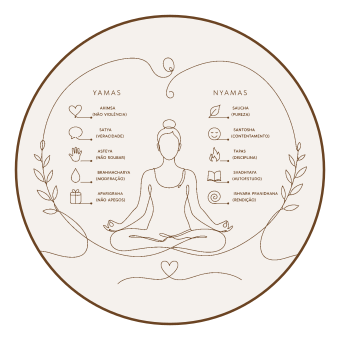
These first two limbs function as ethical and behavioral compasses. Without them, Yoga runs the risk of becoming merely a physical exercise; with them, our daily practice transforms into a true Sadhana — a tool for conscious transformation and spiritual evolution.
1. The Yamas: Our Relationship with the World (Social Conduct)
The Yamas are five ethical guidelines that direct our interaction with others, with society, and with the environment around us. They are conscious restraints that help us pacify our external actions:
- Ahimsa (Non-violence): This is the fundamental pillar of all Yoga. It goes far beyond not causing physical harm; it requires cultivating compassion, empathy, and peace in thoughts, words, and actions, both toward others and toward ourselves.
- Satya (Truthfulness): Living with honesty, integrity, and authenticity. It means aligning what we think, say, and do. However, the expression of truth must always be anchored in Ahimsa (it must not be used to cause needless harm).
- Asteya (Non-stealing): This means not appropriating what does not rightfully belong to us, whether it is a material object, someone else's time, ideas, or another person's merit. It combats greed and encourages generosity.
- Brahmacharya (Moderation / Right Use of Energy): Traditionally associated with monastic celibacy, in a contemporary context it is interpreted as the moderation of sensory impulses. It is the conscious direction of our vital energy toward that which elevates us, avoiding the waste of energy on trivial distractions.
- Aparigraha (Non-attachment / Non-possessiveness): Practicing detachment from material goods, expectations, status, or outcomes. It is the freedom to enjoy life without being enslaved by the desire for possession, cultivating simplicity and self-sufficiency.
2. The Niyamas: Our Relationship with Ourselves (Internal Observances)
While the Yamas look outward, the Niyamas look inward. They are five personal disciplines and codes of conduct that cultivate the internal environment necessary for spiritual growth and maturity:
- Saucha (Purity): This refers both to physical cleanliness (care for the body, pure diet, and organization of the space we inhabit) and to mental clarity (purification of thoughts through meditation).
- Santosha (Contentment): Cultivating gratitude and peace with current circumstances. It does not mean passivity or complacency, but rather the capacity to find contentment in the present, recognizing that true happiness does not depend on future external achievements.
- Tapas (Self-discipline or Fiery Effort): This is the fire or heat generated by constant discipline. It represents the willpower and determination needed to maintain our practice even when the mind offers excuses, fatigue, or resistance. It is the catalytic element that burns away mental impurities and transforms habit into spiritual evolution.
- Svadhyaya (Self-study): The reflective study of ourselves — observing our mental patterns, reactions, fears, and egos. It is also complemented by the study of sacred texts and the philosophy of Yoga, which serve as a mirror for our own Soul.
- Ishvara Pranidhana (Surrender / Devotion): Cultivating humility and trust before the flow of the universe. It means letting go of absolute control and surrendering or dedicating our actions to a higher power, to the absolute, or to the divine that dwells in everything.
Integration into Daily Practice
At the Kamala Shala Institute, we understand that true Yoga begins when we fold up the practice mat. The Yamas and Niyamas are not dogmas or punitive rules, but rather invitations to live with greater lucidity.
By integrating these principles into our routine, we purify the mind and emotions, creating the ideal ground for meditation and inner peace to flourish naturally and sustainably, achieving the true goal of the practice: becoming masters of ourselves.