Within the complex energetic web that constitutes the subtle physiology of Yoga, few breath-regulation techniques (pranayamas) hold as much functional relevance as anuloma viloma. Considered one of the most accessible yet profound breathing exercises, it serves as a central tool for harmonizing the vital currents and stabilizing the flow of the mind.
Etymology and Conceptualization
The term anuloma viloma comes from Sanskrit and derives from the combination of roots that describe the natural alternation of the airflow:
- Anuloma (अनुलोम): Composed of anu ("in favor of," "with") and loma ("hair," "direction"). It translates as "with the grain," "in the natural order," or "in favor of the natural current."
- Viloma (विलोम): Composed of vi ("against," "reverse") and loma. It means "against the grain," "in reverse order," or "in the opposite direction."
Together, the terms name the rhythmic act of guiding the breath by alternating the passage of air between the left and right nostrils, consciously regulating inhalation (puraka) and exhalation (recaka).
Distinction between Anuloma Viloma and Nadi Shodhana
Although in contemporary practice the two terms are often used interchangeably, the technical tradition draws subtle distinctions:
- Anuloma Viloma: Focuses on the continuous alternation of air through the nostrils without prolonged breath retention (kumbhaka), making it suitable for both beginners and advanced practitioners.
- Nadi Shodhana: Literally translated as "purification of the energy channels" (nadis), it typically introduces internal and external retentions, at times accompanied by energetic locks (bandhas).
Historical Context and Scriptural Foundations
The origin of anuloma viloma is deeply intertwined with the conceptions of the subtle body (sukshma sharira) developed in the Vedic and Tantric traditions of ancient India. Classical Hatha Yoga texts — such as the Haṭha Yoga Pradīpikā (15th century), the Gheraṇḍa Saṁhitā, and the Śiva Saṁhitā — state that the subtle organism is traversed by a vast network of 72,000 vital channels, known as nadis.
Three of these channels play a primary role in physical and psychic regulation:
- Iḍā Nāḍī: The channel associated with lunar energy (chandra), the feminine polarity, bodily cooling, introspection, and the parasympathetic nervous system. It connects to the left nostril.
- Piṅgalā Nāḍī: The channel associated with solar energy (surya), the masculine polarity, warmth, outward activity, digestive vigor, and the sympathetic nervous system. It connects to the right nostril.
- Suṣumṇā Nāḍī: The central channel that runs along the axis of the spine. When Iḍā and Piṅgalā are purified and balanced through anuloma viloma, prana (vital energy) flows toward the Suṣumṇā, inducing a natural state of meditation and mental stillness.
Physiological and Psychic Benefits and Functions
Modern studies in neurophysiology and integrative medicine support the traditional wisdom of the yogis regarding the effectiveness of alternate breathing.
Physiological Effects
- Harmonization of the Nasal Cycle: The human body naturally alternates respiratory dominance between the nostrils every 90 to 120 minutes. Anuloma viloma optimizes this alternation, stimulating both cerebral hemispheres in a balanced way.
- Activation of the Parasympathetic Nervous System: The slow, controlled cadence, especially during exhalation, stimulates the vagus nerve, reducing heart rate, blood pressure, and the secretion of stress hormones such as cortisol.
- Improved Gas Exchange: Strengthens the diaphragm, increases the efficiency of cellular oxygenation, and promotes gentle expansion of lung capacity.
Mental and Emotional Effects
- Reduction of Mental Agitation (Chitta Vritti): The need to focus on counting and alternating the breath slows the activity of the prefrontal cortex, easing obsessive thoughts and anxiety.
- Emotional Stability: By balancing the active (solar) and receptive (lunar) forces, the technique smooths mood swings and states of mental fatigue.
- Preparation for Meditation: Acts as an effective bridge between physical postures (asanas) and focused concentration (dharana).
How to Practice: Technical Step-by-Step
To reap the benefits of the practice with complete safety, it is recommended to follow the traditional execution protocol.
Preparation and Posture
- Environment: Choose a clean, well-ventilated, quiet place with a comfortable temperature.
- Body Posture: Sit in a stable, comfortable position (Padmasana, Siddhasana, Sukhasana, or on a chair with the soles of the feet resting on the floor). Keep the spine, neck, and head upright, without tensing the shoulders.
- Left Hand (Jnana Mudra): Rest the back of the left hand on the left knee, gently joining the tips of the thumb and index finger. Let the other fingers remain relaxed and extended.
- Right Hand (Vishnu Mudra / Nasikagra Mudra): Fold the index and middle fingers toward the palm. The right thumb will be used to close the right nostril, while the ring and little fingers control the left nostril.
The Breathing Cycle
- Emptying: Gently close the eyes and exhale all the air from the lungs through both nostrils.
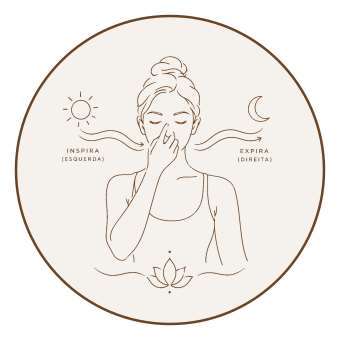
- Inhalation through the Left Nostril: Seal the right nostril with the right thumb and inhale smoothly, continuously, and silently through the left nostril.
- Alternation: Release the thumb from the right nostril and seal the left nostril with the ring finger.
- Exhalation through the Right Nostril: Exhale the air fluidly and slowly through the right nostril.
- Inhalation through the Right Nostril: Keeping the left nostril sealed, inhale deeply and silently through the right nostril.
- Alternation and Completion of the Cycle: Seal the right nostril with the thumb, release the left nostril, and exhale gently through it.
Definition of 1 Cycle: Inhale through the left → Exhale through the right → Inhale through the right → Exhale through the left.
Rhythm and Duration
- Initial Ratio (1:1): Inhale for 4 seconds and exhale for 4 seconds.
- Intermediate Ratio (1:2): Inhale for 4 seconds and exhale for 8 seconds (the prolonged exhalation enhances relaxation).
- Frequency: Perform 5 to 10 cycles per session (about 5 to 10 minutes daily).
Precautions, Warnings, and Contraindications
Although this is a safe practice for most people, a few points should be observed:
- No Forcing: The breath should always be silent, comfortable, and free of excessive effort. Do not force the lungs or try to induce a feeling of breathlessness.
- Nasal Obstruction: In cases of severe cold, acute sinusitis, or rhinitis with significant congestion, avoid forcing air through the nostrils. Cleanse beforehand with saline solution or wait until recovery.
- Hypertension and Heart Conditions: People with uncontrolled high blood pressure, heart conditions, or severe anxiety should avoid breath retention (kumbhaka), keeping the exercise strictly in continuous flow.
- Timing of Practice: Preferably practice on an empty stomach (allowing an interval of at least 2 to 3 hours after main meals).